If you want a garage you can actually use all year (a warm, dry workshop, gym or home for a car you care about) the old assumption is that brick is the “proper” way to build it. In 2026 that’s worth a second look. A modern insulated steel-frame building — the engineered end of what’s loosely called a metal garage — gives you the warmth and permanence people buy brick for, usually for less money, in a fraction of the time, with none of the mess — and, unlike brick, you can take it with you if you move.
Here’s an honest, like-for-like comparison of the three ways to add a garage: an insulated steel-frame (sandwich-panel) building, a brick or block build, and a concrete sectional garage.
The three options in plain terms
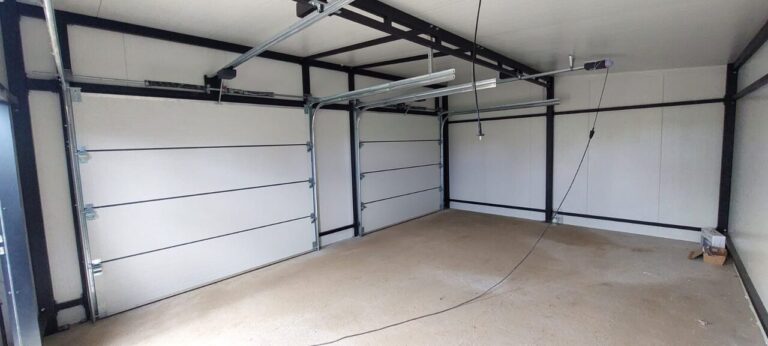
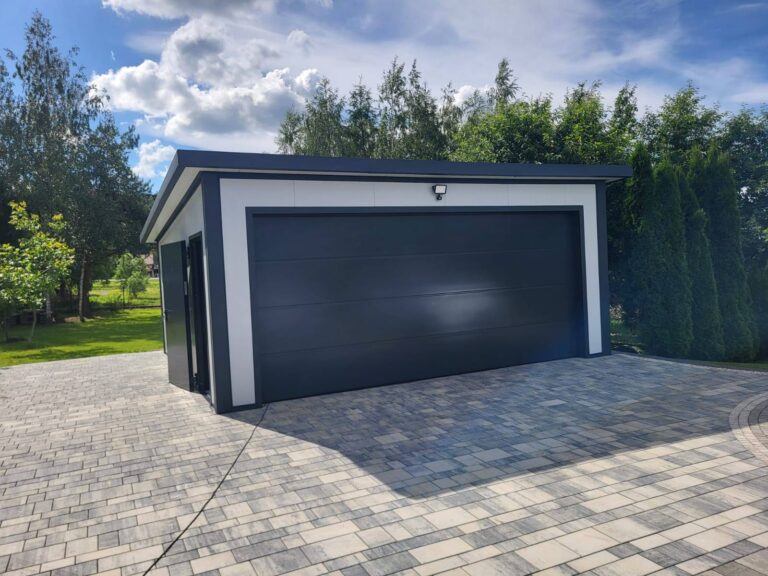
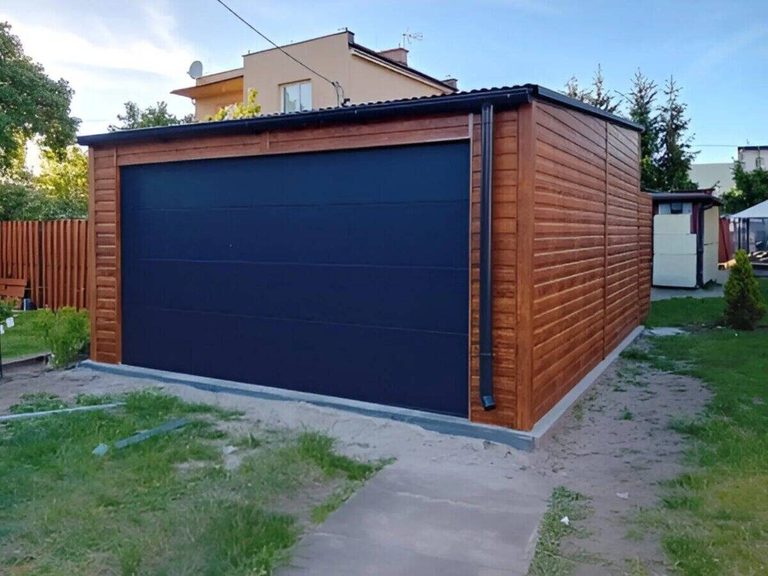
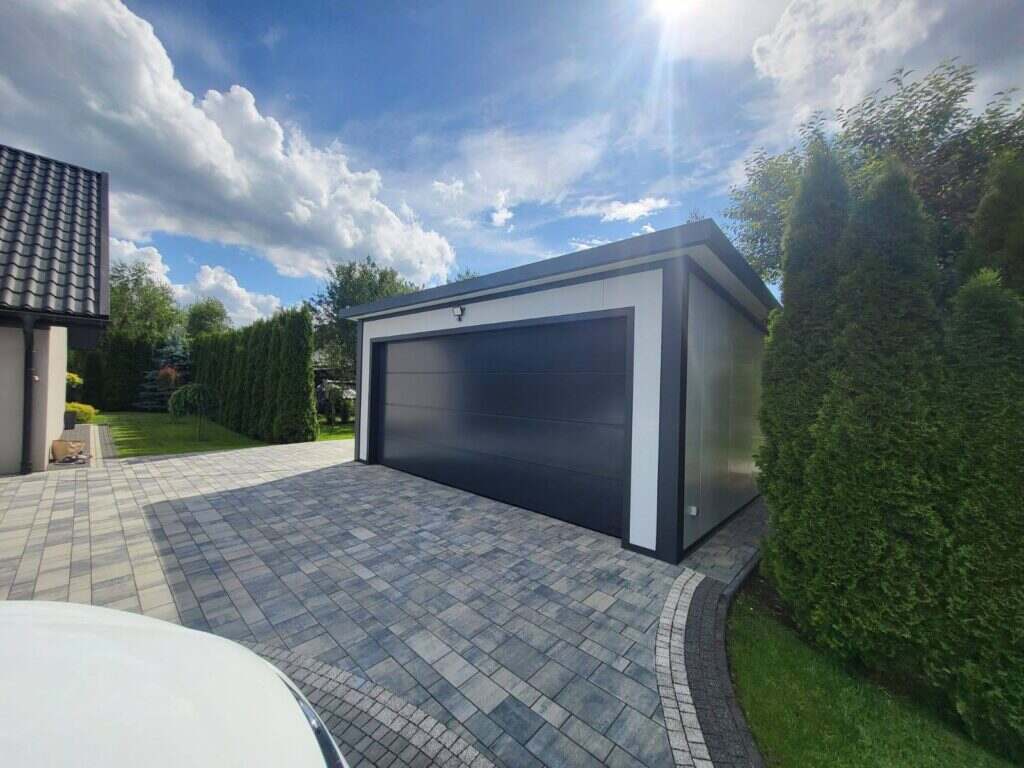
- Insulated steel-frame garage: a precision steel frame clad in 100mm PIR insulated sandwich panels (a rigid insulation core bonded between two steel skins). Manufactured off-site, delivered and bolted together on a prepared base. Warm, dry and finished. VeltHaven’s insulated garages start at £23,950 fully installed.
- Brick or block build — traditional masonry, built on site by trades. Solid and familiar, but slow, disruptive, and cold unless you insulate it separately. Typically £15,000–£30,000+.
- Concrete sectional — pre-cast concrete panels bolted together. The cheapest “permanent” option (around £9,000–£12,000 installed), but single-skin, poorly insulated, prone to condensation, and utilitarian to look at.
Cost
A brick garage is the most expensive route because you’re paying for skilled trades, time on site and deep foundations: commonly £15,000–£30,000+ for a single, more for anything larger or finished to a high standard. A concrete sectional is the cheapest up front but isn’t really comparable: it’s an uninsulated shell.
An insulated steel-frame garage sits between the two on price while being a genuinely warm, finished building: VeltHaven’s start at £23,950 fully installed, including VAT, delivery and an insulated automatic sectional door. For a comparable, insulated spec, it’s usually better value than brick — and you’re not paying separately to insulate, plaster and heat a cold masonry shell afterwards. (Full price grids in our garage cost guide.)
Build time and disruption
This is where the gap is biggest. A brick build is weeks to months of trades, deliveries, scaffolding, dust and weather delays in your garden. An insulated steel-frame building is manufactured off-site and delivered and installed in days on a prepared base — far less mess, and a fixed timeline. A concrete sectional is also quick to erect, but you’re erecting a cold box.
Foundations and groundwork
Brick needs substantial footings to carry the masonry — more excavation, more concrete, more cost. A steel-frame building is far lighter, so it sits on a simpler, slimmer base. Either way, VeltHaven assesses and quotes the base from your site photos before you commit (see our groundwork guide), so there are no surprises on installation day. Our free base guide breaks down the slab sizes and concrete grades behind both.
Warmth, comfort and condensation
A bare brick or concrete garage is cold, and single-skin concrete is a condensation trap: damp air beads on the cold surface, which is bad news for tools and cars. To make brick warm you have to insulate, line and heat it as a separate (and costly) job.
A 100mm PIR insulated building is warm in winter and cool in summer out of the box. The insulation keeps the inner walls near room temperature, so condensation is largely designed out, and a single heater is enough to take the chill off. The panels also soften sound — rain on the roof, the road outside. It’s the difference between somewhere you park and somewhere you’d happily set up an office or a gym.
Durability and maintenance
Brick is famously long-lasting, and that’s a fair point in its favour. But a quality steel-frame, steel-skinned building is also built for decades of everyday use, with a low-maintenance finish that doesn’t need repointing or repainting like masonry can. VeltHaven backs its garages with the 10-Year Structural Warranty (2 years full warranty + structural cover to year 10) — does not affect your statutory rights.
Planning
All three are usually permitted development when set back from your boundaries and within the height limits, with the same rules applying regardless of construction — though it always depends on size, position and your property, and differs in conservation areas. See our planning guide.
Can you move it?
Only one of the three. A brick or concrete garage is built in place and stays there. If you move home, you leave it behind. An insulated steel-frame building bolts together rather than being poured, so it can be dismantled and reassembled. For many owners that’s a genuine advantage: the building is an asset that can move with you, not a fixture you gift to the next owner.
Side by side
| Insulated steel-frame | Brick / block | Concrete sectional | |
|---|---|---|---|
| Typical cost | from £23,950 installed | £15,000–£30,000+ | £9,000–£12,000 |
| Warm & dry year-round | Yes (100mm PIR) | Only if insulated separately | No (cold, condensation) |
| Build time | Days | Weeks–months | Days |
| Foundations | Light, simple base | Deep footings | Heavy base |
| Mess / disruption | Minimal (off-site built) | High | Moderate |
| Relocatable | Yes | No | No |
| Look | Clean, architectural | Traditional masonry | Utilitarian |
When brick or concrete still makes sense
To be fair to the alternatives: if you specifically want a masonry building that matches a brick house, or you’re building an integral garage as part of the home under the same roof, brick is the natural choice. And if you only need the cheapest possible dry shell for storage and don’t care about warmth or looks, a concrete sectional will do it for less up front. For most people who want a comfortable, good-looking garage they’ll actually use, though, an insulated steel-frame building is the better balance of cost, comfort, speed and flexibility.
Steel vs brick FAQs
Do steel garages rust?
A quality steel building is galvanised and powder-coated precisely so it doesn’t — the finish needs no repointing or repainting, just an occasional wash. The rust risk people actually encounter is condensation inside cheap uninsulated metal sheds; a 100mm PIR insulated building designs that out.
Is a brick garage worth the extra money?
If you want masonry that matches a brick house, or an integral garage under the same roof — yes, that’s what brick is for. For a warm, dry, standalone building you’ll use, an insulated steel-frame garage delivers the same practical result in days rather than months, without paying separately to insulate and line a cold shell.
Does a steel-frame garage need planning permission?
The same permitted development rules apply regardless of construction — steel, brick or concrete. Most detached garages within height limits and set back from boundaries qualify; see our planning guide.
Our planning permission for a garage guide covers the full rules, including the SUV and VAN height cases.
Can you really move a steel garage?
Yes: it bolts together rather than being poured or laid, so it can be dismantled and reassembled at a new property. Budget for new groundwork at the destination and professional disassembly; it’s a real option brick simply doesn’t have.
If you only remember one thing
For a garage you’ll work in, train in, or keep something you care about in, an insulated steel-frame building gives you the warmth and permanence of brick — for less cost, in days not months, with no condensation, and the freedom to take it with you. Brick wins on matching a masonry home; concrete wins only on rock-bottom price for a cold shell.
See the insulated garage range, compare it with our steel line in Steel vs Insulated Garage, or build and price yours in a few minutes — free, no site visit needed. Your deposit is fully refundable until you pay your balance.
Every VeltHaven building is delivered and installed by a UK-registered company (Companies House 17261887), with the VeltHaven 10-Year Structural Warranty (2 years full warranty + structural cover to year 10). Does not affect your statutory rights.