The concrete sectional garage is a British institution — panel-built, bolted together on a slab, standing at the end of driveways since the 1960s. Modern steel garages — the engineered end of the metal garage market — compete for exactly the same job. Below is how they actually compare in 2026, including where the concrete build still wins.
The short answer
A concrete sectional garage is usually the cheapest way to put a solid single garage on a drive — typically £6,000–£14,000 installed for standard sizes. A steel garage costs more like-for-like — VeltHaven’s start at £9,995 installed, including VAT and an automated door — and buys a different class of building: bigger standard sizes, a powder-coated finish in your choice of colour, an insulated automated door as standard, and a clean upgrade path to a fully insulated, heatable building. If the brief is “cheapest weatherproof box for one car”, concrete remains hard to beat. If the garage is meant to look like part of the house and work as more than parking, steel is the stronger buy.
At a glance
| Concrete sectional | Steel (VeltHaven) | |
|---|---|---|
| Typical installed price | £6,000 – £14,000 (single) | From £9,995 single · £15,995 double |
| Standard sizes | Mostly narrow singles (~2.6–3.6m wide) | 4–6m wide singles, doubles to 9×6m |
| Door | Basic up-and-over usually standard | Insulated automated sectional door included |
| Looks | Utilitarian panel joints; limited finishes | Powder-coated steel, choice of RAL colours |
| Condensation | Common complaint on bare panels | Managed detailing; insulated line eliminates it |
| Insulation path | Difficult retrofit | Factory option — same building, 100mm PIR |
| Lifespan | Very long; panels can spall/stain with age | Long; coated steel, bolted frame |
| Warranty | Commonly around 10 years structural | VeltHaven 10-Year Structural Warranty (2 years full warranty + structural cover to year 10) |
Price, and what the gap buys
On a headline single garage, concrete wins the price row and it isn’t close: panel systems are cheap to make and quick to erect. The gap narrows once specs align, though. Concrete quotes at the bottom of the range typically mean a narrow shell with a manual up-and-over door; an automated sectional door, a wider bay or a second bay move the total up quickly. A VeltHaven steel single at £9,995 already includes the insulated automated sectional door, a 4×6m footprint (a full metre wider than most concrete singles) and delivery, installation and VAT. Both need a concrete base — see the groundwork guide — so that cost is common to each. Our free base guide covers what that base needs regardless of which garage type sits on it.
Full market context, including brick, is in the garage cost guide and our steel vs brick comparison.
Size: the quiet dealbreaker
Concrete sectional ranges are built around the classic British single: roughly 2.6–3.6m wide. As we covered in single vs double garage, that width is the reason so many garages never see a car — a modern SUV fits the space but not the door-opening. Steel construction spans wider without intermediate supports, which is why VeltHaven’s smallest garage is 4m wide, and doubles run to 9m with two or three bays. If your car is anything larger than a hatchback, check internal width before comparing prices at all.
Condensation and comfort
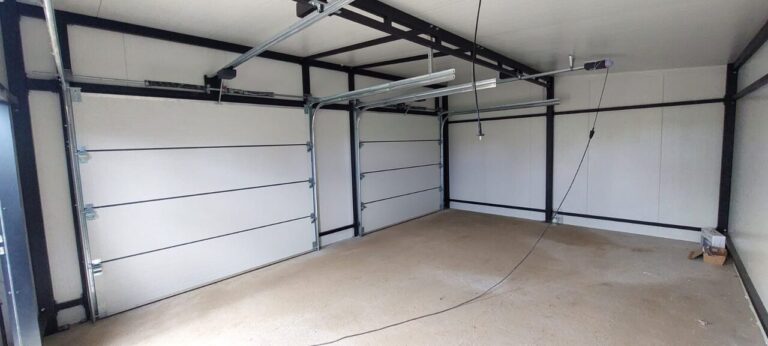
The most common complaint inside bare concrete (and bare metal) garages is condensation — warm moist air hitting cold panels, dripping onto whatever’s stored below. Good detailing and ventilation manage it; insulation solves it. Here the construction paths diverge: insulating a concrete sectional is an awkward retrofit around panel joints, while the steel building comes in a factory-insulated version — the Insulated Garages line, same footprints with 100mm PIR walls and roof — that turns the garage into a dry, heatable workshop or gym.
Age, appearance and resale
Concrete sectionals last decades. There are 50-year-old examples still standing, which is both the compliment and the problem: many look every year of it, with stained panels and visible joints, and buyers read them as dated. One caution when buying a used one: some pre-1980s concrete garages have asbestos-cement roofs, which carry disposal costs when replaced. New builds have no such issue on either side.
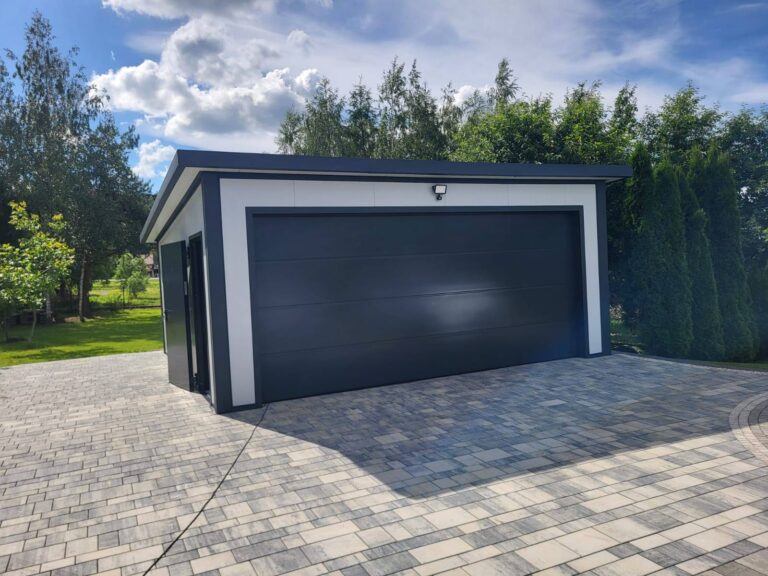
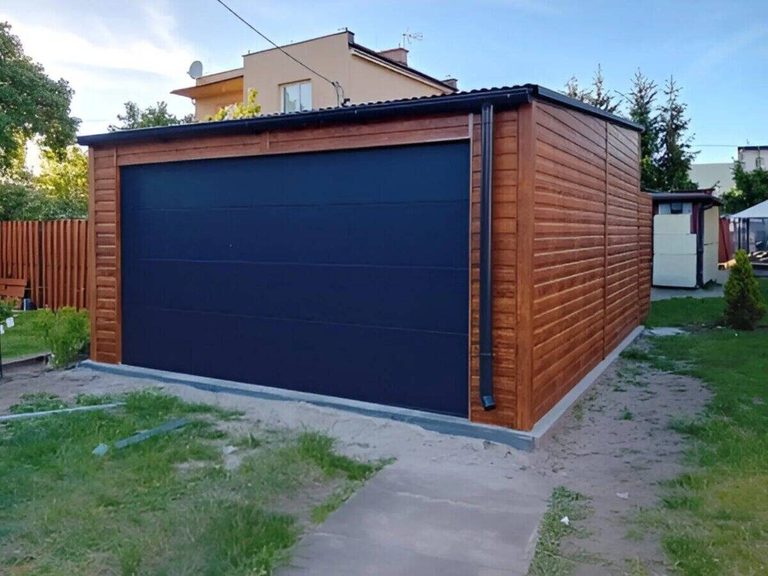
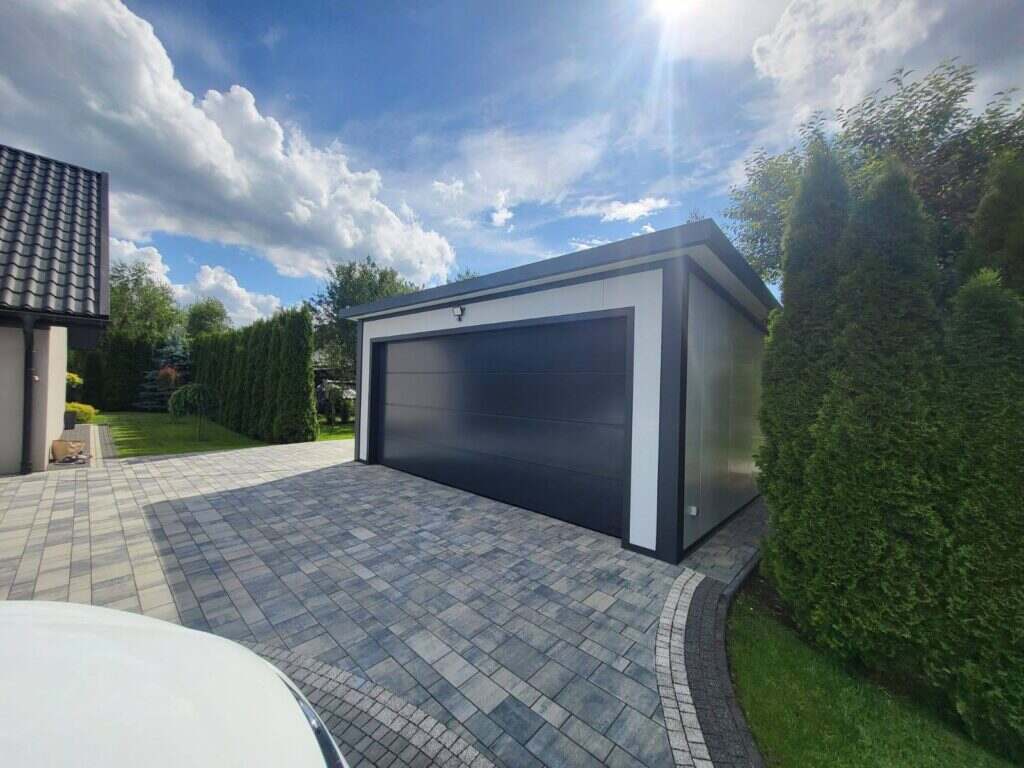
A powder-coated steel building in a RAL colour matched to your windows or front door reads as part of the house rather than an outbuilding behind it. Appearance is taste; we’d only argue it shouldn’t be an afterthought on a building you see every day from the kitchen window.
So which should you choose?
Choose a concrete sectional if: the budget is firmly under £10,000, the job is pure car storage or overflow, a standard narrow single fits your vehicle, and looks don’t matter much on your plot.
Choose steel if: your car needs the width, you want the automated door and a finish that matches the house, condensation-free storage matters, or there’s any chance the garage becomes a workshop or gym — the insulated upgrade path is the decisive difference.
You can price any size and height in the garage configurator — the estimate updates live, including doors and extras, and your deposit is fully refundable until you pay your balance.
Steel vs concrete garage FAQs
Are concrete sectional garages cheaper than steel?
At entry level, yes — typically £6,000–£14,000 installed against £9,995+ for steel. Matched for width, door specification and finish, the gap shrinks substantially; the widest concrete singles with automated doors overlap steel pricing.
Do steel garages rust?
A modern powder-coated, galvanised steel building is designed for UK weather; this is not the corrugated tin shed of memory. VeltHaven backs the structure with the 10-Year Structural Warranty (2 years full warranty + structural cover to year 10).
How long does a concrete sectional garage last?
Decades — durability is its genuine strength. The caveats are cosmetic ageing (staining, spalling at joints) and, on old second-hand units, possible asbestos-cement roofing with associated disposal costs.
Do both need a concrete base?
Yes: a level, load-bearing slab either way. Prepared yourself or by your own groundworker it typically runs £4,500–£12,500 depending on size and ground; VeltHaven Foundation Management, a paid extra, is a guide £9,995–£15,995, quoted from photos before you commit. See the groundwork guide.
Every VeltHaven building is delivered and installed by a UK-registered company (Companies House 17261887), with the VeltHaven 10-Year Structural Warranty (2 years full warranty + structural cover to year 10). Does not affect your statutory rights.