Condensation is the quiet killer of cheap garden buildings. It shows up as wet windows in the morning, then damp corners, then mould on the things you stored — and by the time you can smell it, it’s been happening for months. The good news: it’s not bad luck, it’s physics, and a properly built room avoids most of it by design. Here’s an honest explanation of why garden rooms get damp, why well-insulated ones mostly don’t, and the habits that keep any room dry.
Why condensation happens at all
Warm air holds more moisture than cold air. When warm, moist air touches a surface colder than itself, it sheds that moisture as liquid — the same reason a cold drink sweats in summer. In a garden building, the moisture comes from you: breathing, a kettle, gym sessions, drying laundry, even houseplants. The cold surfaces are whichever parts of the building let the outside temperature through.
That’s the whole story. Every condensation problem is those two ingredients meeting: moist air and a cold surface. So there are exactly two levers — warm up the surfaces, or move the moist air out before it settles.
Why cheap buildings suffer and insulated ones mostly don’t
A single-skin metal shed is essentially a condensation machine: the walls track the outside temperature, so on a cold morning the whole interior is one big cold surface. Anything stored against the walls gets damp, and there’s nothing you can do about it beyond leaving the door open.
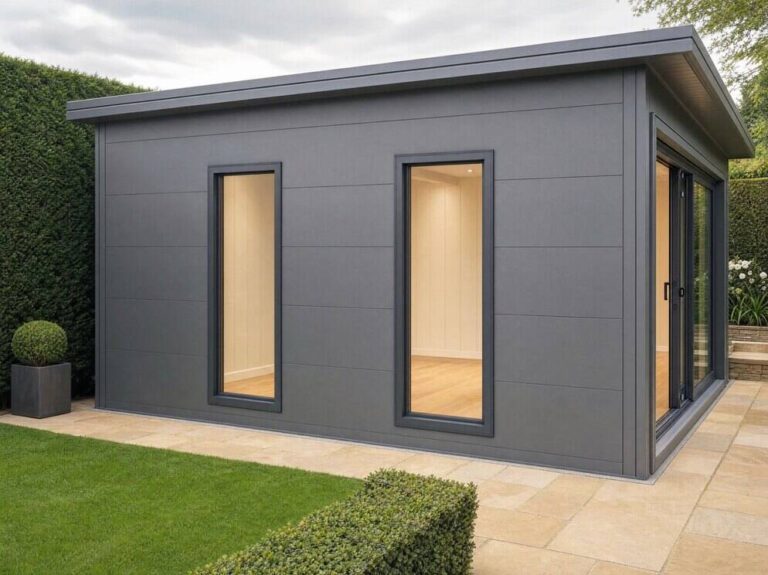
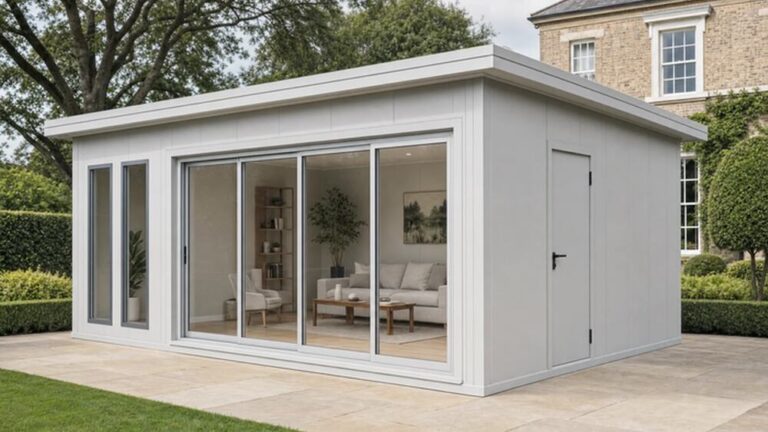
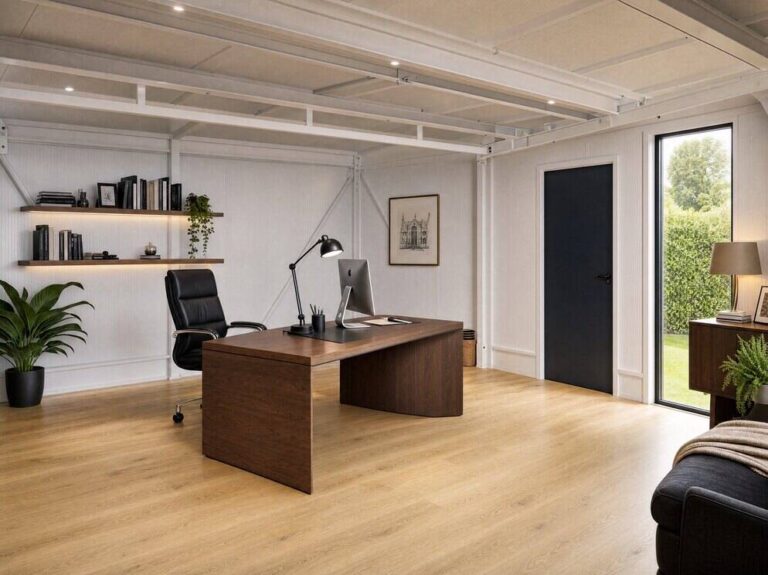
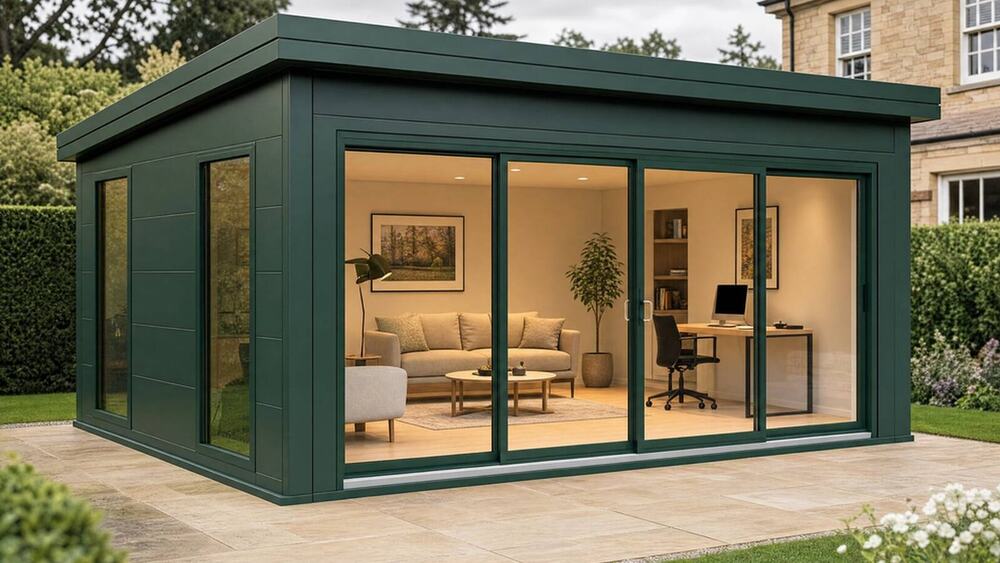
A properly insulated room changes the physics. In a VeltHaven garden room, the walls and roof are 100mm PIR-insulated panels (wall U-value ~0.23 W/m²K) with tongue-and-groove joints sealed against moisture, so the inside face of the wall stays close to room temperature instead of tracking the weather. Warm interior surfaces give airborne moisture far fewer places to condense. The glazing matters just as much: our sliding glass wall is triple-glazed, which keeps the inner pane markedly warmer than the single glazing in a typical summerhouse — where the glass is usually the first place you see water.
Insulation doesn’t remove moisture, though — it removes cold surfaces. The moisture you generate still needs somewhere to go, which is where ventilation comes in.
Ventilation: the habits that keep a room dry
None of this is complicated, but it’s worth doing deliberately:
Air the room briefly and regularly. A few minutes with the sliding wall or a window open swaps the moist inside air for drier outside air — even in winter, cold outside air carries less total moisture than warm inside air. A short, full air-change beats leaving a window cracked all day.
Don’t lock the room up wet. The riskiest pattern is a humid evening use (a gym session, a gathering, laundry drying) followed by locking the door on that moist air overnight while temperatures fall. Air it before you lock it, especially in humid summer weather and mild damp winters.
Match ventilation to how you use the room. A garden office generates modest moisture — normal airing covers it. A garden gym generates a lot; ventilate during and after sessions. If you routinely dry clothes in the room, expect to give it more airflow than either.
Heat gently rather than in bursts. A consistently, mildly warm room keeps surfaces above the temperature where moisture settles. Blasting heat for an hour then letting the room go cold creates exactly the warm-moist-air-meets-cooling-surface cycle you’re trying to avoid. If your room has our Climate Comfort option (a Daikin heat pump), a low steady setting in winter is more effective against damp than occasional full-power sessions — and cheaper to run than the equivalent in panel heaters.
The problems ventilation won’t fix
Worth being clear: airflow solves airborne moisture, not water getting in. If a building lets rain through a joint, wicks moisture up from a poor base, or has no membrane between the ground and the floor, no amount of ventilation will keep it dry. That’s a build-quality problem, not a habits problem — and it’s the difference a sealed panel system and a proper structural base make. It’s also a fair question to put to any supplier: what stops ground moisture reaching the floor, and what seals the wall joints? If the answer is vague, the mould will be specific.
Garden room condensation FAQs
Will an insulated garden room ever get condensation?
It can — insulation removes the cold surfaces, not the moisture. Heavy use with no airing (a gym session with the doors shut, laundry left overnight) can still fog the glazing. The difference is that in an insulated room, brief airing fixes it; in an uninsulated one, nothing does.
Do I need a dehumidifier in a garden room?
For a well-insulated, sensibly ventilated room in normal use — usually not. Where owners do use one: heavy gym use, regular laundry drying, or storing moisture-sensitive equipment through winter with the room otherwise unused. A small unit on a humidity setting covers those cases.
Why is my shed damp but my neighbour’s garden room isn’t?
Almost certainly the wall build-up. A single-skin shed’s walls are as cold as the outside air, so moisture condenses on every interior surface. An insulated room’s interior surfaces stay near room temperature, giving moisture nowhere to settle. It’s the same reason one is usable in January and the other isn’t.
Does condensation damage the building itself?
In a sealed-panel steel-frame build, occasional surface condensation on glazing does no structural harm — wipe it and improve the airing habit. Persistent damp in timber-framed buildings is a different story: it finds its way into the frame, and that is structural. It’s one of the quiet reasons a well-built room holds its value while a cheap one becomes a liability.
Where that leaves you
Condensation isn’t a mystery and it isn’t inevitable. It’s moist air meeting cold surfaces. A properly insulated build removes the cold surfaces; a few deliberate habits remove the moist air. Get both right and a garden room stays dry, mould-free and pleasant in every month of the year.
See the specification on the Garden Rooms page, or build and price yours in a few minutes — free, no site visit needed. Your deposit is fully refundable until you pay your balance.
Every VeltHaven building is delivered and installed by a UK-registered company (Companies House 17261887), with the VeltHaven 10-Year Structural Warranty (2 years full warranty + structural cover to year 10). Does not affect your statutory rights.