Search this question and you’ll find confident numbers everywhere: “adds 5–15%”, “adds 8.4%”, “adds £45,000 to a £300,000 home.” Here’s the answer: nobody can promise you a figure like that — and we won’t. What we can do is explain where those numbers come from, what genuinely affects whether a garden room helps at sale, and what the reliable return actually is.
Where the “adds £X” figures come from
Follow the widely quoted percentages back to their source and you’ll find they don’t trace to published research — no RICS valuation study, no Land Registry dataset, no named methodology. They circulate from marketing page to marketing page because they’re persuasive, not because they’re verified. A serious valuation of your home depends on your street, your buyer, your garden, and the quality of the building — which is exactly why a one-size-fits-all percentage can’t be honest.
That’s not to say a garden room adds nothing. It’s to say the truthful claim is more careful than a headline number.
What surveyors and buyers actually respond to
There’s no universal uplift, but there are consistent patterns in what makes an outbuilding an asset rather than a liability at sale:
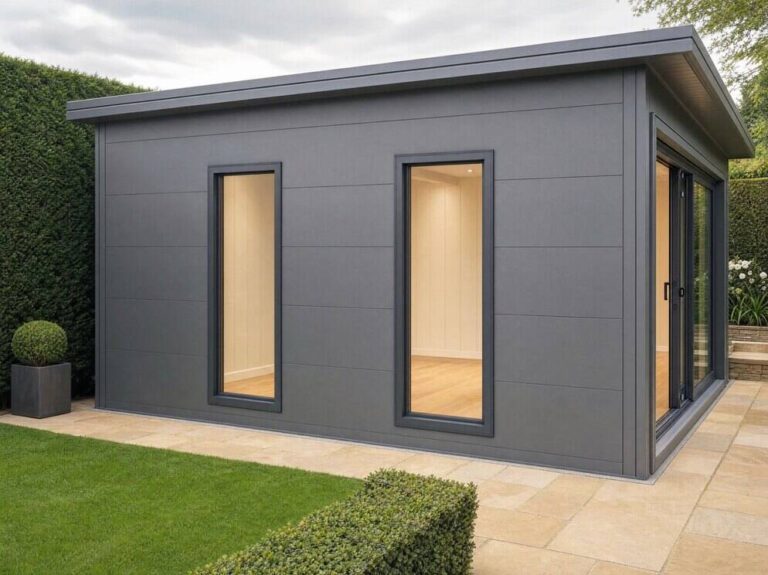
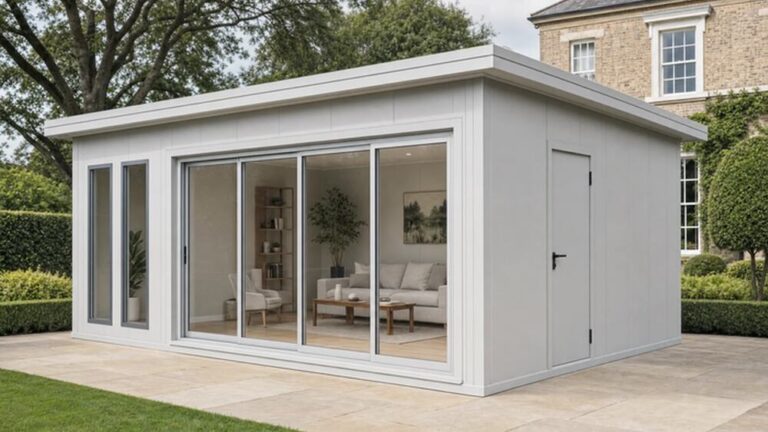
- Build quality that’s evident. A warm, dry, solidly built room reads as extra usable space. A rotting shed with a desk in it reads as a demolition job. Buyers can tell within seconds — insulation spec, glazing and finish do the talking. (What separates the two.)
- A clean planning position. A room that clearly sits within permitted development (or has paperwork proving it) removes a buyer’s solicitor’s first objection. A structure with murky planning status can actively hurt a sale. (Our planning permission for a garden room guide covers the rules.)
- Certified work. Electrics with Part P certification, documentation in order, a transferable warranty. Paperwork is value.
- Space that wasn’t taken from something buyers want. A garden room that leaves the garage, parking and most of the garden intact adds an amenity. One that swallows a small garden can subtract one.
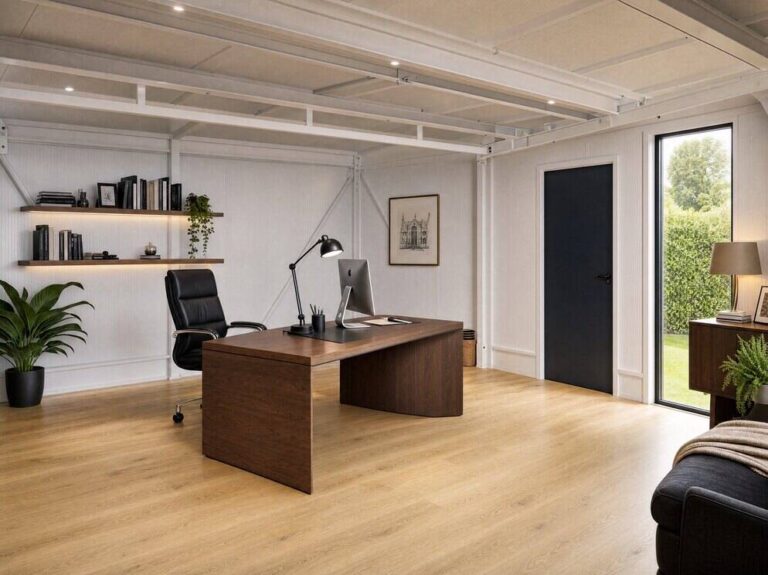
- A use the next buyer recognises. Home office and gym are near-universal wants in 2026; highly personalised fit-outs travel less well.
In short: a good garden room makes your home more sellable to the buyers who want one, a real but unquantifiable advantage. A poor one costs you twice.
The return you can actually count on
Here’s the calculation that doesn’t require guessing what a future buyer pays.
A VeltHaven garden room starts at £22,995 fully installed. Compare the alternatives for gaining a room: a single-storey extension commonly runs £2,500–£4,000+ per square metre and weeks of disruption; moving house costs stamp duty, fees and upheaval. Against either, a garden room is the cheapest way to add usable space — and unlike the uplift question, the use is certain. An office you work in every day, a gym that saves a membership and a commute, a studio that gives a hobby a home: that’s value you collect weekly for as long as you own the house, whatever a valuer eventually says.
That’s why our own homepage puts it this way: the return isn’t an invented “adds £X to your home” number — it’s space you actually use, every week, for decades.
If resale matters to you, do these things
- Buy insulated and glazed for year-round use — a fair-weather building impresses nobody in a February viewing.
- Keep the planning position clean and keep the paperwork.
- Use certified trades for electrics and keep the certificates.
- Choose a transferable warranty. The VeltHaven 10-Year Structural Warranty transfers to a new owner with written notice — a concrete answer to a buyer’s “what if” question.
- Don’t sacrifice what buyers already value — parking, the garage, most of the lawn.
Garden room value FAQs
So you won’t tell me a percentage at all?
No — because we’d be making it up, and you’d have no way to hold us to it. Any figure that isn’t drawn from a valuation of your specific property is marketing, not fact. What we’ll happily show you instead is exactly what the building costs, all-in, before you commit.
Does a garden room count in an estate agent’s floor area?
Detached outbuildings normally aren’t counted in a home’s gross internal area, which is one reason “adds X%” claims are shaky. Agents list a quality garden room as a feature (“detached garden office”) where it earns attention rather than square footage.
Can a garden room ever reduce value?
A badly built, unmaintained or planning-dubious structure can, yes — buyers price in removal or regularisation. Quality, compliance and paperwork are what keep you on the right side of that line.
Is a garden room worth it if I might move in a few years?
Worth it is a use question: if you’ll use it daily until then, it earns its keep regardless of the sale outcome. And a VeltHaven building has one option brick extensions don’t — it bolts together, so it can be dismantled and moved with you.
What to do next
Does a garden room add value? It adds certain, weekly use-value, and it can make your home more sellable. But no credible company can promise you a percentage. Judge it as a room you’ll use for years, not as a speculative investment, and buy the quality, planning position and paperwork that protect you either way.
See the range on the Garden Rooms page, check what one costs, or build and price yours in a few minutes — free, no site visit needed. Your deposit is fully refundable until you pay your balance.
Every VeltHaven building is delivered and installed by a UK-registered company (Companies House 17261887), with the VeltHaven 10-Year Structural Warranty (2 years full warranty + structural cover to year 10). Does not affect your statutory rights.