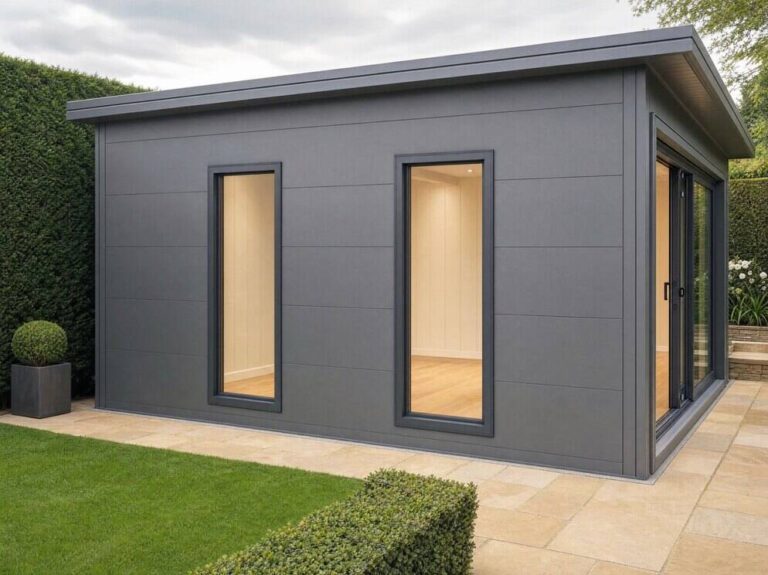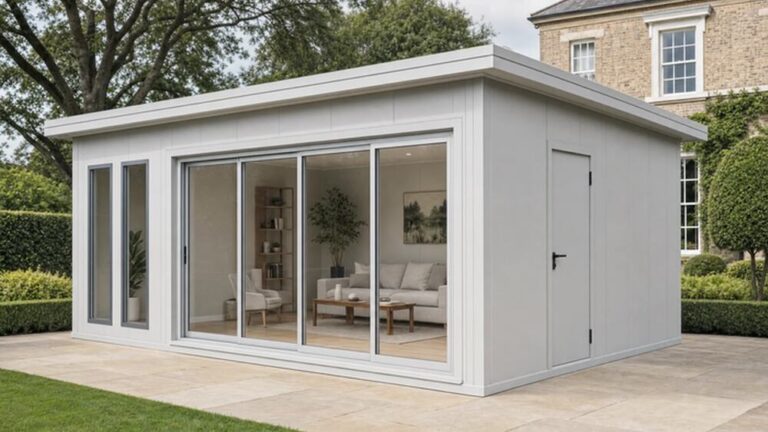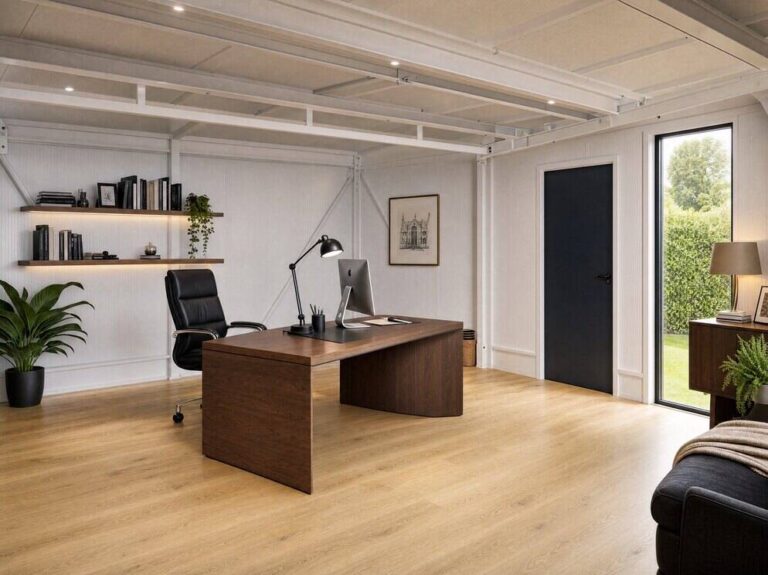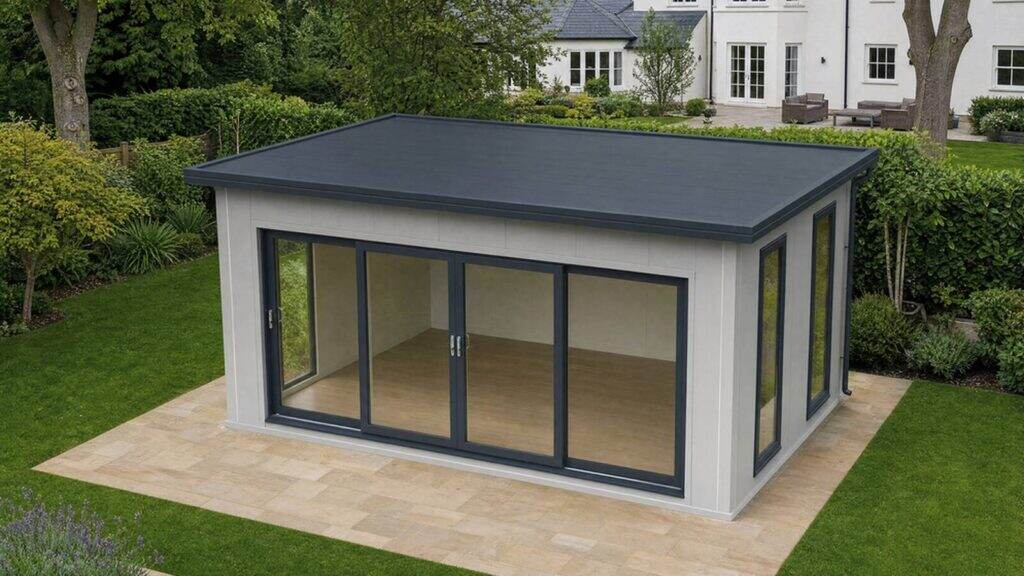
A properly built garden room is comfortable to use all year — including a cold British January. The catch is in those two words, “properly built”. The difference between a room you’ll use every day and a glorified summerhouse you abandon in October comes down to three things: insulation, glazing and heating. Here’s what actually matters, and how to tell a year-round room from a fair-weather one.
The short answer
If a garden room has genuine insulation, good glazing and a sensible bit of heating, it holds a comfortable temperature in winter for very little running cost. If it has thin walls, single or basic double glazing and no insulation (which describes most budget “summerhouses”) it will be cold, damp and barely usable from autumn to spring, whatever the brochure says.
Why so many garden rooms are cold
The trap is that a cheap timber summerhouse and a proper insulated garden room can look similar in photos and cost very differently — and the cheap one quietly leaves out the parts that keep you warm:
- Thin, un-insulated walls that follow the outside temperature.
- Single or low-spec glazing that loses heat and runs with condensation.
- Gaps and thermal bridges where cold gets in and warm air escapes.
Heat one of these and you’re heating the garden. That’s why “warm in winter” is the single most important question to ask before you buy.
What actually makes a garden room warm
1. Insulation (the biggest factor)
Insulation is what lets a room hold heat instead of bleeding it outside. The measure to look for is the U-value: how easily heat passes through a wall (lower is better). A solid brick wall is around 2.0 W/m²K; a well-insulated modern wall is well under 0.3.
VeltHaven garden rooms are built from 100mm PIR sandwich panels (a rigid insulation core bonded between two steel skins) on an engineered steel frame, giving a wall U-value of about 0.23 W/m²K. That’s the same insulated steel build as our insulated garages, and it’s the reason the room stays comfortable with only modest heating.
2. Glazing
A wall of glass is the whole point of a garden room, but glass is also where heat escapes — so the glazing has to work hard. Look for triple glazing and an insulated frame. Our rooms use a triple-glazed sliding glass wall (a whole-window U-value of around 0.76 W/m²K) and triple-glazed side windows, so the light comes in without the warmth going out.
3. Airtightness and no cold spots
Insulation and glazing only deliver if the building is sealed and free of thermal bridges (cold paths through the structure). Sandwich panels with a concealed, sealed tongue-and-groove joint lock together to keep draughts out and limit condensation — which is what keeps the room dry as well as warm. Our condensation and ventilation guide covers why this happens and how to prevent it in full.
4. A sensible heat source
Even the best-insulated room needs a little heat in deep winter — but “a little” is the key word. A well-insulated, triple-glazed room can be warmed by a small heater, and most efficiently by a heat pump. Our Climate Comfort option (a Daikin heat-pump system) heats in winter and cools in summer, app-controlled, and is included as standard at the Executive specification. Because the building does most of the work, running costs are modest — the exact figure depends on your tariff and how warm you keep it.
Will it get damp or mouldy?
This is the other winter worry, and it’s really the same answer. Damp and mould come from condensation — warm, moist air meeting a cold surface. In an un-insulated room, the walls are cold, so moisture beads on them. In a 100mm PIR insulated room the inner surfaces stay near room temperature, so condensation is largely designed out, and the room stays dry as well as warm.
Insulated garden room vs a summerhouse, in winter
| Insulated garden room (100mm PIR) | Basic summerhouse | |
|---|---|---|
| Walls | Insulated, ~0.23 W/m²K | Thin timber, little/no insulation |
| Glazing | Triple-glazed | Single / basic double |
| Winter use | Comfortable with modest heating | Cold, damp, rarely used |
| Condensation | Largely designed out | Common |
| Running cost to heat | Low (insulation does the work) | High (heating the garden) |
So, can you use a garden room all year?
Yes, if it’s built for it. A genuinely insulated, triple-glazed garden room is a room you’ll use in February as readily as in June — an office, gym or studio that doesn’t go into hibernation when the clocks change. The thing to check before you buy isn’t the photo; it’s the wall build, the glazing spec and whether heating is available.
Winter warmth FAQs
Do garden rooms get damp in winter?
A properly insulated one shouldn’t. Damp comes from condensation — warm air meeting a cold surface. In a 100mm PIR room the inner walls stay near room temperature, so there’s no cold surface for moisture to settle on. Thin-walled summerhouses are where the damp stories come from.
Can you sleep in a garden room in winter?
It’s warm enough for an afternoon nap on the sofa — but a garden room shouldn’t be used as self-contained sleeping accommodation. That changes its planning position, which is why we never market one as an annexe or bedroom. As an office, gym, studio or snug, it’s a year-round room. See our planning guide.
How much does it cost to heat a garden room in winter?
Modest — the insulation does most of the work, so a small heat source maintains comfort. A heat pump (our Climate Comfort option) is the most efficient route. The exact figure depends on your tariff and how warm you keep it, so we won’t invent a number; the point is that a well-insulated room needs a fraction of the heat an uninsulated one leaks.
What U-value should a garden room have?
For genuine year-round use, look for walls comfortably under 0.3 W/m²K (our 100mm PIR build achieves about 0.23) and glazing well under 1.0 (our triple-glazed sliding wall is around 0.76). If a seller can’t tell you the U-values, that tells you something too.
The short version
If you want the numbers behind a year-round room, our overview of garden building costs and the full garden room cost guide break down the specifications and pricing, and you can design and price your room (choosing the specification and the Climate Comfort heating) in a few minutes, free, no site visit needed. Your deposit is fully refundable until you pay your balance.
See the full range on the Garden Rooms page.
Every VeltHaven building is delivered and installed by a UK-registered company (Companies House 17261887), with the VeltHaven 10-Year Structural Warranty (2 years full warranty + structural cover to year 10). Does not affect your statutory rights.