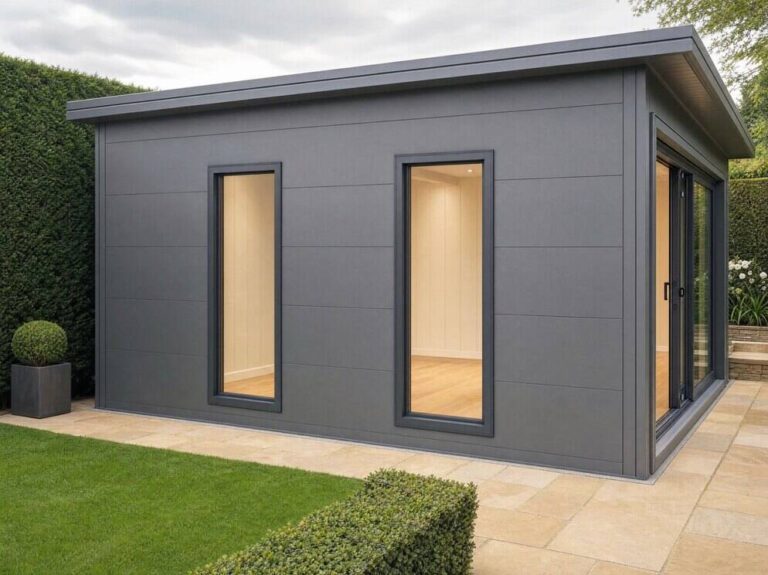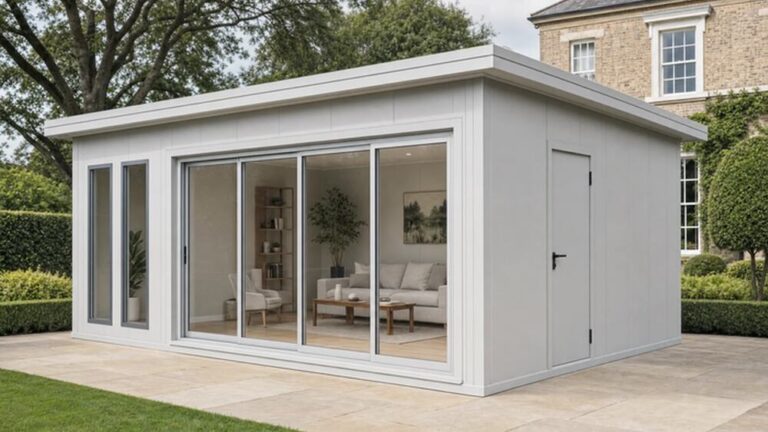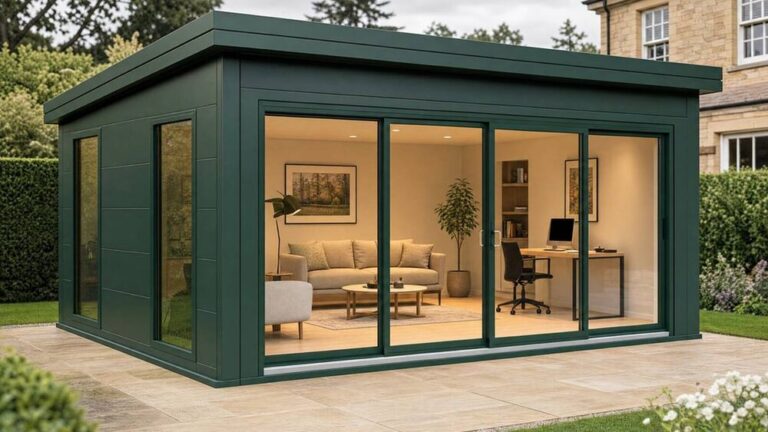
Two questions come up as soon as a garden office stops being an idea and starts being a plan: “will my council tax go up?” and “will I get hit with business rates?” For the overwhelming majority of people working from a garden office, the general position is reassuring. But there are real exceptions, and the answer involves knowing where the lines are. Below is the general UK picture, the situations that change it, and exactly who to confirm with. One thing before anything else: this is general information, not tax or legal advice. The bodies that decide these things are your local council and the Valuation Office Agency (VOA), and your accountant knows your situation. Confirm with them before relying on anything here.
The general position, in plain English
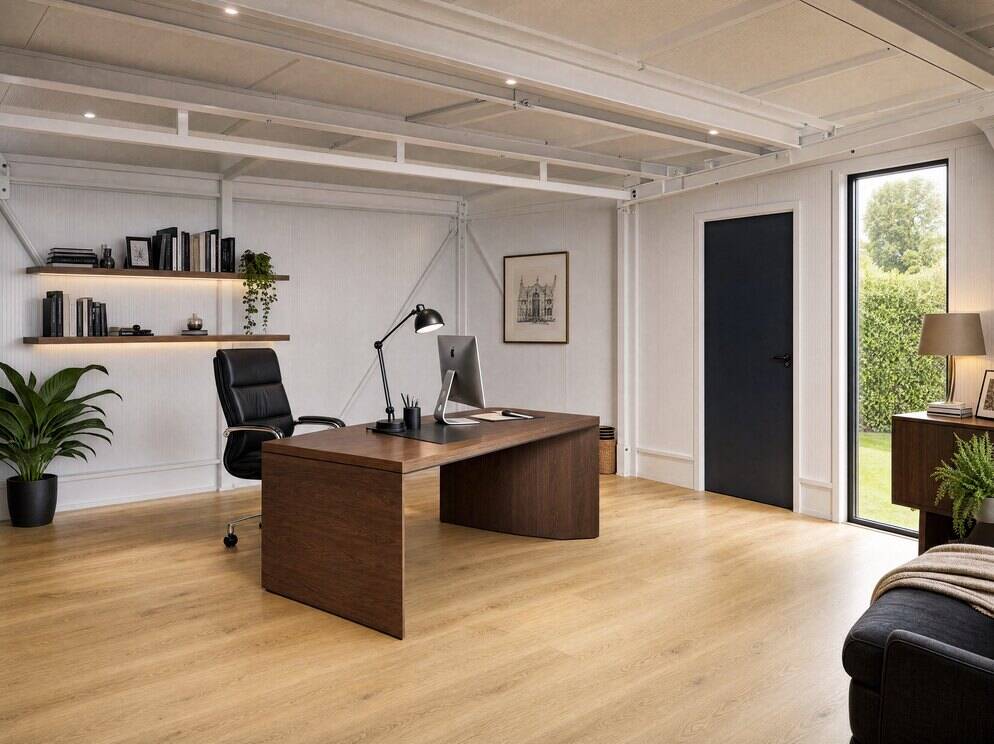
For a typical setup — you, working at a desk in your own garden, for your own job or business, in a room that’s part of your home’s garden — the general position in the UK is that a garden office does not normally create a separate council tax bill or trigger business rates. Home working of this kind is treated as ordinary domestic use of your property. Thousands of people do exactly this without their council ever needing to know or care.
That’s the norm. The exceptions below are what move a situation out of it.
What can change the council tax picture
Council tax follows how a space functions as living accommodation, and two patterns are worth knowing about:
Self-contained living space. If a garden building is kitted out to function as its own dwelling (sleeping space, kitchen facilities, its own bathroom), the VOA can treat it as a separate unit for council tax, regardless of what you call it. This is about what the building is, not what the paperwork says. It’s one reason VeltHaven garden rooms are designed and sold as day rooms (offices, gyms, studios) and never marketed as annexes or bedrooms.
Value-affecting improvements generally. Substantial improvements to a property can be taken into account when it’s next revalued, which in England typically happens at the point the property is sold, not when you build. In practice this is a question about your long-term picture, and a good one for your accountant or a surveyor rather than a reason not to build. (On whether a garden room helps your sale price at all, we’ve written frankly about that too.)
What can bring business rates into play
Business rates attach to property used for non-domestic purposes. The patterns that can bring a garden office into scope are broadly:
- Clients or customers regularly visiting the building — a treatment room, a salon, a studio where customers come to you. Regular public-facing use looks non-domestic in a way that solo desk work doesn’t. (Our running a business from a garden office guide covers the planning and insurance angles of the same line.)
- Employees working there — someone other than your household routinely working in the building.
- Exclusive business use with the character of premises — signage, business-only fit-out, no domestic function at all. The more the building resembles commercial premises that happen to be in a garden, the more relevant business rates become.
- Letting the building out — including holiday or workspace letting; income use is its own category.
Even where a building is assessed for business rates, small business rate relief means many sole traders in this position pay little or nothing — but whether relief applies is precisely the kind of case-specific question the VOA and your accountant exist for. We won’t pretend to answer it here.
A simple test
If a stranger looking at your setup would say “that’s someone working from home,” you’re almost certainly in the normal, nothing-changes category. If they’d say “that’s a business operating from a garden” (customers arriving, staff, signage, a sofa-bed and a shower for weekend guests) then you’re in ask-first territory, and the asking is cheap: the VOA and your council both handle these questions routinely, and a short conversation before you commit beats a surprise after.
Who to actually confirm with
- Valuation Office Agency (VOA) — the body that decides both council tax banding and business rates assessments in England and Wales (Scotland has its own Assessors, Northern Ireland uses LPS). If your use pattern touches any exception above, they’re the definitive answer.
- Your local council — for how banding or rates would apply once assessed.
- Your accountant — for how any of this interacts with expensing the building, VAT and capital gains (the same “ask your accountant” we give on buying through the business) — the tax angles connect, and they’re qualified to join them up; we’re not.
Council tax & business rates FAQs
Will adding a garden office increase my council tax now?
In the normal case — no new bill and no re-banding when you build. Council tax re-assessment in England is generally triggered at the next sale of the property, not by the improvement itself. Self-contained living accommodation is the exception that can be assessed separately. Confirm your specifics with the VOA.
I see clients once or twice a month. Business rates?
Occasional visits are a grey area: frequency and character of use matter, and we’d be guessing if we drew the line for you. This exact pattern is worth a quick VOA query; it’s a routine question for them.
Does using my garden office for work change my home insurance or mortgage?
It can: insurers and some mortgage terms ask about business use of the property, particularly with client visits or stock storage. Tell your insurer how the building will be used; it’s usually a non-event, but it needs to be their non-event, not an assumption.
Can VeltHaven tell me whether my setup triggers rates?
No — and be wary of any supplier who will. We can tell you what the building is and how it’s classified for planning; how your use of it is treated for tax sits with the VOA, your council and your accountant. What we will do is provide proper documentation and invoices for whatever route your advisors recommend.
Where that leaves you
For ordinary home working, a garden office normally changes nothing about your council tax and triggers no business rates. The exceptions cluster around living accommodation, regular visitors, employees and exclusive commercial use. If your plan touches one of those, a short conversation with the VOA and your accountant before you order costs nothing. General information only — your council, the VOA and your accountant are the ones who can confirm your position.
Planning the office itself? Start with the Garden Office guide or see the range on the Garden Rooms page. Your deposit is fully refundable until you pay your balance.
Every VeltHaven building is delivered and installed by a UK-registered company (Companies House 17261887), with the VeltHaven 10-Year Structural Warranty (2 years full warranty + structural cover to year 10). Does not affect your statutory rights.