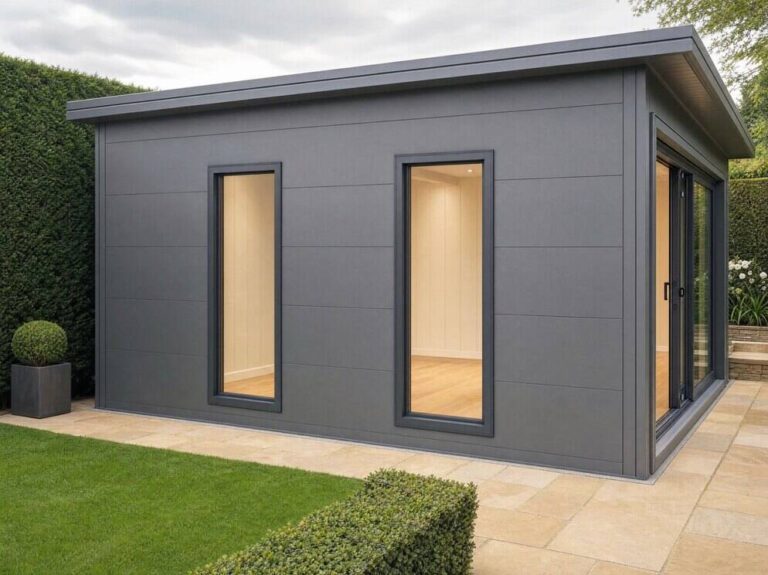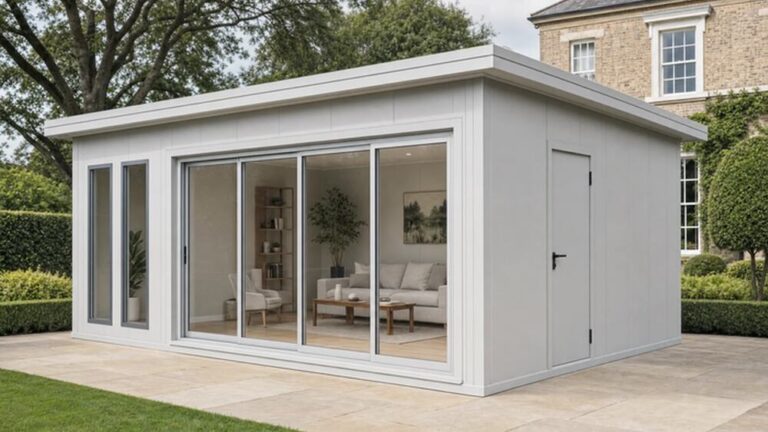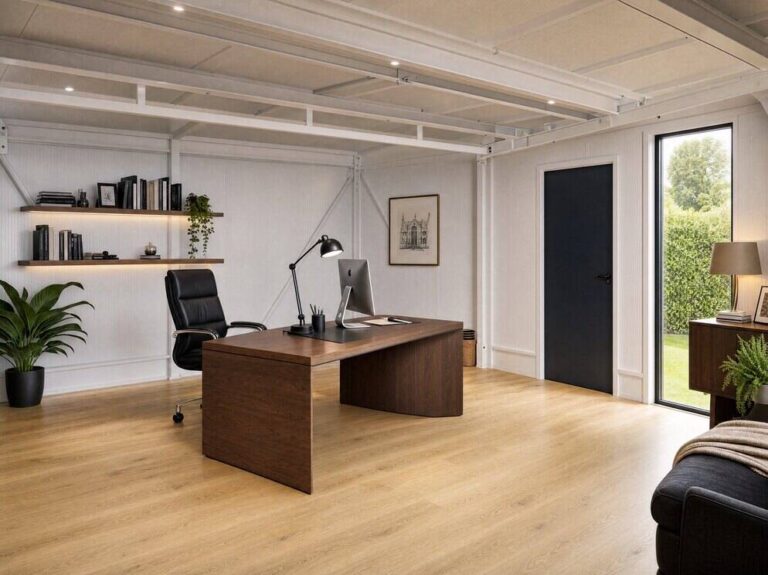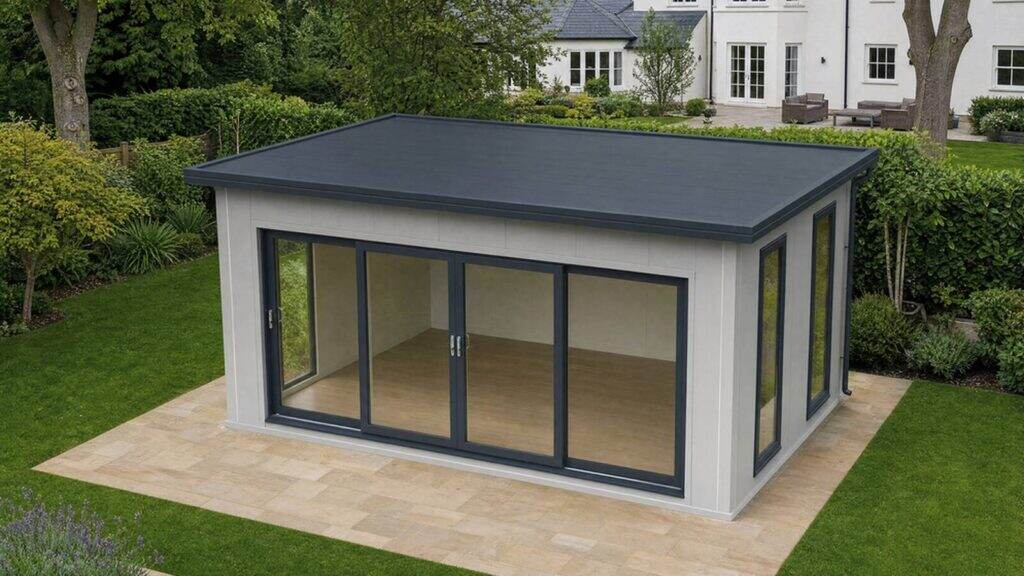
You need another room. The two serious ways to get one are to extend the house or to put a garden room at the bottom of the garden. They solve the same problem at very different prices, timescales and levels of disruption — and they produce different kinds of space. Here’s an honest comparison so you can decide which one you’re actually shopping for.
The short answer
An extension adds attached, plumbed space and typically costs £2,500–£4,000+ per square metre once design fees, building regs and finishing are counted, commonly £50,000–£80,000+ for a modest single-storey room, over months of building work. A garden room adds separate space at roughly £1,200–£2,500 per square metre (a VeltHaven garden room runs about £900–£1,150/m² for our Core package, from £22,995 fully installed), with days of on-site work rather than months. If the room must be part of the house (a kitchen, a bathroom, a bedroom), extend. If it’s an office, gym, studio or snug, the garden room usually wins on every other line.
At a glance
| Single-storey extension | Garden room | |
|---|---|---|
| Typical cost (2026) | £2,500–£4,000+ per m²; ~£50k–£80k+ for ~20 m² | £1,200–£2,500 per m²; VeltHaven from £22,995 installed |
| Time on site | 3–6 months of building work | Base in advance; installed in days |
| Disruption | Trades in the house, dust, no kitchen/garden for weeks | Confined to the bottom of the garden |
| Planning | Permitted development within limits, otherwise a planning application; building regs always apply | Usually permitted development as an outbuilding |
| Party wall | Often triggers the Party Wall Act with neighbours | Not applicable |
| Type of space | Attached, plumbed — kitchens, bathrooms, bedrooms | Separate, quiet — office, gym, studio |
| Price certainty | Quotes commonly move during the build | Fixed, all-in price; base quoted up front |
Cost, and why the per-metre gap is so wide
An extension is bespoke construction on your home: foundations, brickwork, roof, structural openings, then plastering, flooring, electrics and decoration — plus architect’s drawings, structural engineer, building control fees and usually 20% VAT on top of builders’ estimates. That’s how a “£40,000 extension” becomes £60,000. Costs also vary with what the build uncovers: drains, levels, the state of the existing wall.
A garden room is a factory-built, insulated building installed on a prepared base. The engineering is repeatable, so the price is knowable in advance. A VeltHaven room is sold at one fixed, all-in price (building, delivery, installation and VAT) with the base and any extra electrical run quoted from photos of your site before you commit, not discovered during the build. See the full breakdown in our garden room cost guide.
One fair caveat the other direction: the extension’s higher price buys integration. If what your house actually lacks is a bigger kitchen or another bathroom, no garden building solves that.
Disruption
This is the difference people underestimate. An extension means months of trades in and around your home — scaffolding, skips, dust through the house, and typically a period without a usable kitchen or garden. Most builds run 3–6 months from breaking ground, longer if the project hits surprises.
A garden room happens at the far end of the garden. The base goes in first, the building is installed in days, and the house is untouched throughout. If you work from home, that difference is not cosmetic — one option takes your workspace offline for a season, the other adds one.
Planning and building regulations
An extension sits under permitted development only within strict limits (depth, height, proportion of the plot); beyond them it needs a full planning application. Either way, Building Regulations always apply (structure, insulation, fire, drainage) with inspections and sign-off. Extensions along a shared boundary often trigger the Party Wall Act, which means formal notice to your neighbours.
A garden room is normally permitted development as an outbuilding, set back from boundaries, within height limits, not used as self-contained sleeping accommodation. Kept under 30 m² and not slept in, it usually needs no building regs sign-off either (electrics must still be certified). Rules differ in conservation areas; we assess yours as part of the design. The detail is in our planning guide and building regulations guide.
Value and resale
An extension adds registered floor area to the house, and estate agents price on floor area — that’s its structural advantage at resale. A garden room adds usable space buyers genuinely value, but we don’t publish invented “adds £X%” figures for either option, because no credible source can promise one for your street. We’ve written the answer on garden rooms and house value separately.
The fairer comparison is cost against use: if a £30,000 garden room gets used every working day as an office or gym, it has done its job whatever a valuer says. If your street ceiling price is already tight, spending £70,000 extending may return less than it costs — ask a local agent before committing either way.
So which should you choose?
Extend the house if: the room must be plumbed or attached (kitchen, bathroom, bedroom), you’re settled for the long term, and the budget stretches to the finished figure — not the builder’s opening quote.
Choose a garden room if: the room is an office, gym, studio or retreat, you want it this season rather than next year, you’d rather keep builders out of the house, and you want the price fixed before work starts.
A VeltHaven garden room comes insulated with 100mm PIR walls and roof, a triple-glazed four-panel sliding glass wall, delivery, installation and VAT included, covered by the VeltHaven 10-Year Structural Warranty (2 years full warranty + structural cover to year 10). Does not affect your statutory rights. You can price a model and specification in the configurator in a few minutes — the estimate updates live, no site visit needed, and your deposit is fully refundable until you pay your balance.
Still weighing routes? We’ve also compared a garden room against converting the garage and against a conservatory, and the wider options in what a garden building costs.
Garden room vs extension FAQs
Is a garden room cheaper than an extension?
Per square metre, considerably — roughly £1,200–£2,500/m² installed against £2,500–£4,000+/m² for an extension once fees, building regs and VAT are counted. A ~20 m² garden room from £22,995 typically undercuts a same-size extension by £25,000 or more. The extension’s premium buys attached, plumbed space.
Can a garden room replace a bedroom extension?
No — and it shouldn’t be marketed as one. A garden room used as self-contained sleeping accommodation changes its planning position. For an extra bedroom or bathroom, an extension is the right tool; the garden room is for the office, gym or studio that frees up a room inside the house.
How long does each take?
An extension typically runs 3–6 months on site, after design and approvals. A garden room needs the base prepared, then installation takes days; the whole process commonly fits inside a few weeks from order, most of it off-site.
Do I need planning permission for either?
Extensions: only within permitted development limits, otherwise yes, and building regs always apply. Garden rooms: usually permitted development as an outbuilding, within height and boundary rules. Conservation areas differ for both. See the planning guide.
Our planning permission for a garden room guide covers the full rules for the garden-room side.
Every VeltHaven building is delivered and installed by a UK-registered company (Companies House 17261887), with the VeltHaven 10-Year Structural Warranty (2 years full warranty + structural cover to year 10). Does not affect your statutory rights.