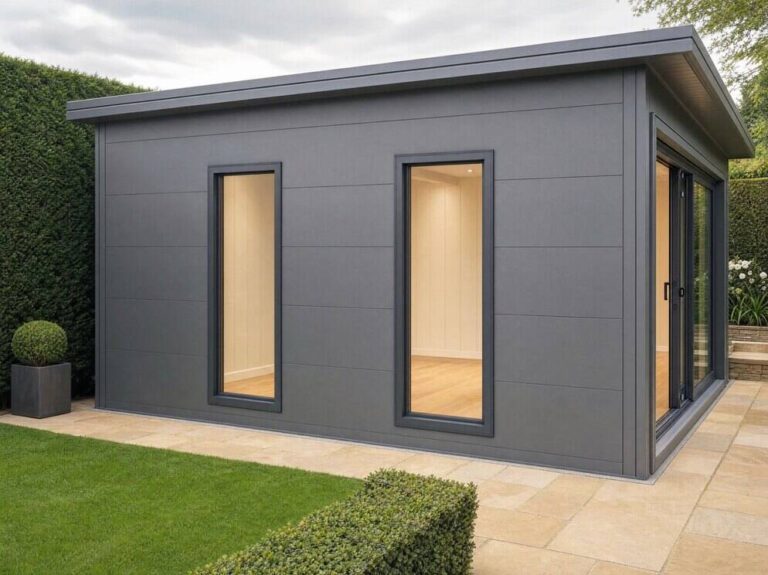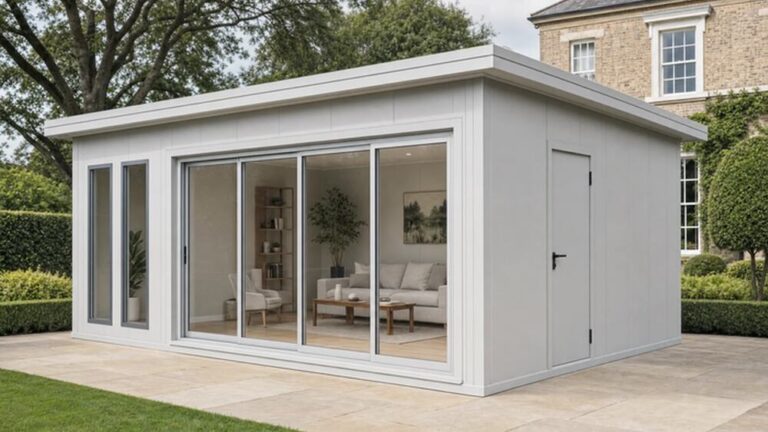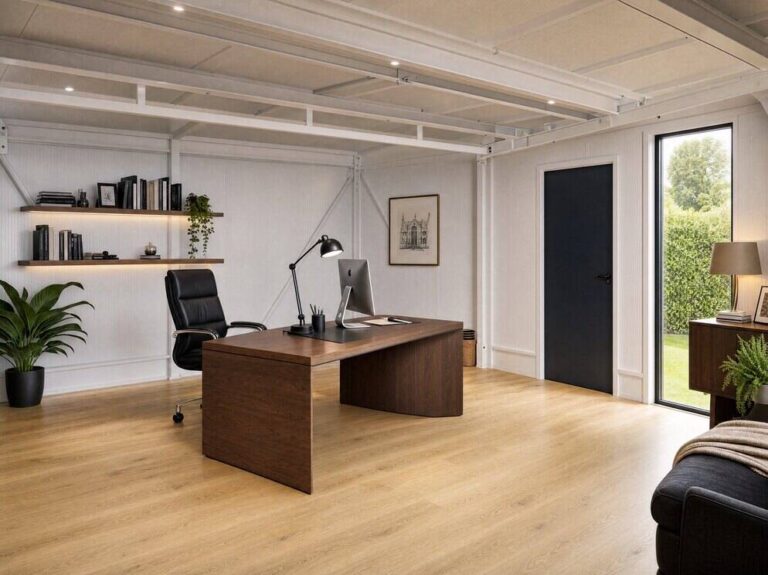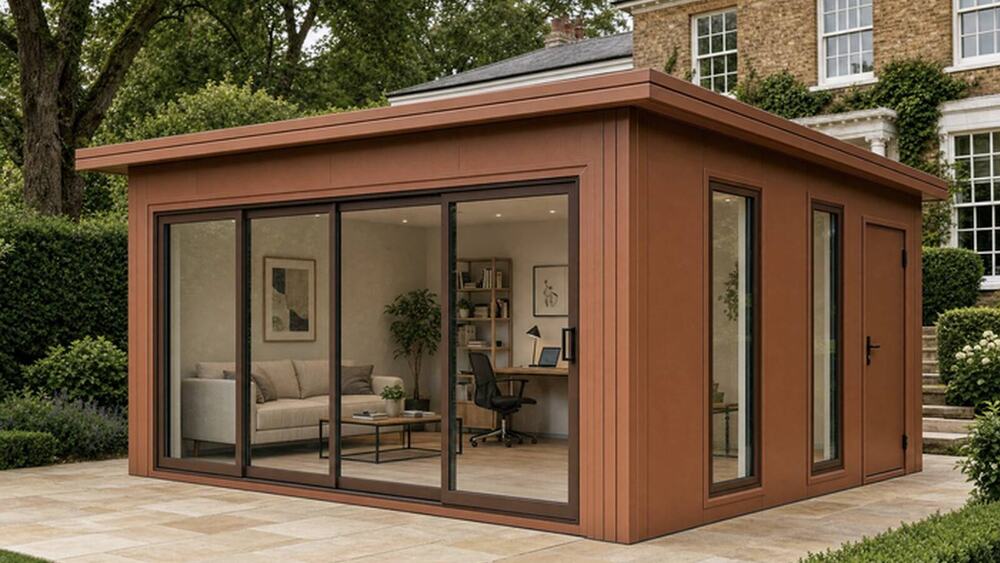
A conservatory and a garden room promise the same thing: a light-filled extra room without the cost of an extension. The difference shows up in February and again in July — one is built around glass, the other around insulation. What follows is a fair comparison, including the cases where the conservatory is the right buy.
The short answer
A conservatory is an attached, mostly-glazed room (typically £10,000–£25,000 for a uPVC build, more for orangery-style) that lives and dies by the weather, running hot in summer and cold in winter unless you spend serious money on roof, glazing and heating upgrades. A garden room is a separate, insulated building (VeltHaven’s start at £22,995 fully installed) designed to hold a comfortable temperature all year. If you want a sunny space joined to the kitchen for plants, breakfast and mild-season sitting, a conservatory does that for less. If you want a room you’ll use every day (office, gym, studio) the garden room is the one that still works in January.
At a glance
| Conservatory | Garden room | |
|---|---|---|
| Typical cost (2026) | £10,000–£25,000 uPVC; £25,000–£50,000+ orangery-style | £15,000–£50,000 market-wide; VeltHaven from £22,995 installed |
| Attached to house | Yes — off the kitchen or living room | No — separate building in the garden |
| Construction | Mostly glass, dwarf walls, polycarbonate or glass roof | Insulated walls and roof (VeltHaven: 100mm PIR), glazed front |
| Summer | Can overheat badly under a glazed roof | Insulated roof keeps it usable |
| Winter | Expensive to keep warm; many go unused | Designed for year-round use |
| Best use | Plants, dining, mild-season sitting room | Office, gym, studio — daily use |
| Planning | Usually permitted development (attached, within limits) | Usually permitted development (outbuilding) |
| Disruption | Days–weeks of work on the house wall | Base in advance, installed in days, house untouched |
The comfort question: glass vs insulation
This is the entire decision, so it deserves the physics.
A conservatory is glazing on a frame. Glass (even good double glazing) insulates far worse than an insulated wall: a typical glazed unit passes several times more heat than a 100mm PIR panel (U-value roughly 1.2–2.8 W/m²K for glazing against 0.23 for the panel). That’s why the classic conservatory pattern is two bad seasons: a greenhouse in July, a fridge in January, with radiators fighting a losing battle in between. Roof upgrades, solar glass and plastered “warm roofs” all help, and all push the price toward garden-room territory.
A garden room flips the ratio: insulated walls and roof, with glazing where you want the light and the view. A VeltHaven room pairs 100mm PIR walls and roof with a triple-glazed four-panel sliding glass wall, so you keep the conservatory’s best feature (the garden pouring in) inside an envelope that holds its temperature. How that plays out in winter is covered in how warm is a garden room in winter?, and for guaranteed heating-and-cooling a Daikin heat pump is included with the Executive package — or added later with Core or Signature.
Cost, like for like
The conservatory’s headline advantage is entry price: a modest uPVC lean-to can be on your house for £10,000–£15,000. But compare what you’re buying. To make a conservatory properly usable year-round (solid or hybrid roof, upgraded glazing, real heating), quotes commonly land at £25,000–£40,000. At that money you’re in insulated garden room territory, without the insulation-first construction.
A VeltHaven garden room is one fixed, all-in figure: from £22,995 including the building, triple glazing, delivery, installation and VAT, roughly £900–£1,150 per square metre for our Core package. The base and any extra electrical run are quoted from photos of your site before you commit. Full numbers in the garden room cost guide.
Attached or separate: which do you actually want?
Don’t skip this question; it decides more than price does.
Attached (conservatory) means the room is part of daily household flow — breakfast off the kitchen, plants, kids in view. It also means household noise travels in, and work-from-home means working ten feet from the dishwasher.
Separate (garden room) is what makes an office or gym work: a commute of twenty metres, a door you close, and the house stays the house. The trade-off is walking across the garden in the rain — worth it for focus, less so if what you really wanted was a bigger kitchen-diner. If that’s the real answer, read garden room vs extension instead.
Planning
Both usually fall under permitted development: a conservatory as a small rear addition within the extension limits, a garden room as an outbuilding — set back from boundaries, within height limits, not used as sleeping accommodation. Conservation areas change both answers. We assess planning as part of every VeltHaven design; see the planning guide.
So which should you choose?
Choose a conservatory if: you want the room attached to the house, its main jobs are plants, light and mild-season sitting, and the budget stops well under £20,000. A conservatory used the way conservatories work is good value.
Choose a garden room if: the room has a daily job (office, gym, studio) and going unused for a season isn’t acceptable. Insulation-first construction is the difference between a room you own and a room you use.
You can price a garden room in the configurator in a few minutes — model, size and specification, with the estimate updating live. No site visit needed, and your deposit is fully refundable until you pay your balance.
Garden room vs conservatory FAQs
Is a garden room more expensive than a conservatory?
At entry level, yes: a basic uPVC conservatory starts around £10,000 against £22,995 for a VeltHaven garden room. Specified for year-round comfort, the gap closes fast: a warm-roofed, well-glazed, heated conservatory commonly reaches £25,000–£40,000, at which point the insulated building is the better-performing purchase.
Why do conservatories get so hot and cold?
Glass. A glazed roof and walls pass heat many times faster than insulated panels, so the room tracks the outside temperature, amplified under summer sun. Solid-roof conversions fix the worst of it, at meaningful cost.
Does a garden room add more value than a conservatory?
We don’t publish invented “adds £X%” figures for either; no credible source can promise one for your street. A tired conservatory can actually count against a house; a well-built, warm room that buyers can imagine using every day rarely does. Our take: does a garden room add value?
Do either need planning permission?
Usually not — conservatories within rear-extension limits and garden rooms within outbuilding rules are both permitted development. Conservation areas and listed buildings change that; check the planning guide.
Our planning permission for a garden room guide covers the full height and boundary detail.
Every VeltHaven building is delivered and installed by a UK-registered company (Companies House 17261887), with the VeltHaven 10-Year Structural Warranty (2 years full warranty + structural cover to year 10). Does not affect your statutory rights.